Even at relatively low pollution levels, chronic exposure to fine particles and nitrogen dioxide was linked to higher disease risk, faster functional decline, and greater need for invasive ventilation in people with motor neuron disease.
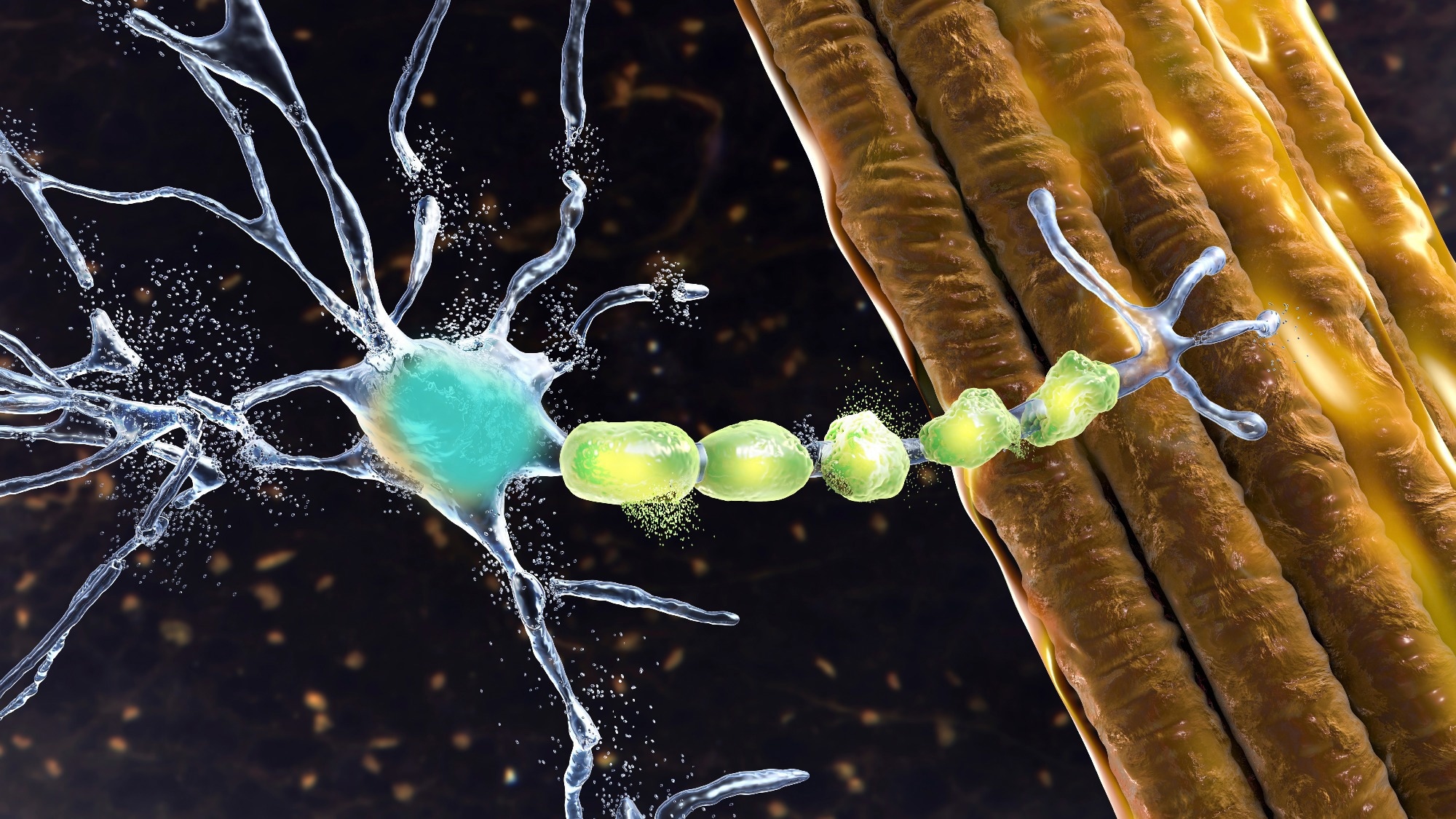
Study: Long-Term Exposure to Air Pollution and Risk and Prognosis of Motor Neuron Disease. Image Credit: Kateryna Kon / Shutterstock
In a recent study published in JAMA Neurology, a group of researchers evaluated whether prolonged exposure to air pollutants influences the risk, survival, and functional progression of motor neuron disease (MND).
Motor Neuron Disease and Environmental Risk Factors
MND affects more than 400,000 people worldwide, with amyotrophic lateral sclerosis (ALS) accounting for nearly 90% of cases and a median survival of less than four years after diagnosis. Although genes account for only a few cases, researchers are shifting their focus to environmental factors.
Air pollution is associated with cardiovascular disease, lung diseases, and dementia. Air pollutants have the potential to cross biological barriers, cause neuroinflammation, and damage neurons. With increasing urbanization and continuous exposure to pollution, the question of how air quality affects neurodegenerative diseases has emerged as a major issue of concern among the general population. Further research is needed to understand how long-term exposure can influence both the development and course of MND.
Study Design and Data Sources
The present nationwide case-control study collected data from the Swedish MND Quality Registry, which captures approximately 80% of diagnosed cases nationwide, and multiple national population registers. Participants diagnosed with MND from 2015 to 2023 were identified and matched with similar individuals according to age and sex. Full siblings of affected individuals were also included as an additional comparison group to reduce genetic and familial confounding. Residential address histories were reconstructed to estimate long-term exposure to air pollutants.
Assessment of Air Pollution Exposure
Spatiotemporal exposure estimates were derived from validated satellite-based models of annual concentrations of particulate matter (PM) with aerodynamic diameters ≤2.5 micrometers (PM2.5), ≤10 micrometers (PM10), 2.5 to 10 micrometers (PM2.5–10), and nitrogen dioxide (NO2). Mean exposures were calculated for one-, three-, five-, and ten-year periods preceding diagnosis.
Clinical Outcomes and Statistical Analysis
Patients were followed after diagnosis to assess survival, use of invasive ventilation (mechanical ventilation via tracheostomy), and functional decline using the ALS Functional Rating Scale–Revised (ALSFRS-R). Statistical analyses included conditional logistic regression for disease risk, flexible parametric survival models for mortality or invasive ventilation, and logistic regression to evaluate fast versus slow functional progression, with adjustment for demographic, socioeconomic, and clinical variables.
Air Pollution and Risk of Motor Neuron Disease
The analysis included 1,463 individuals with newly diagnosed MND, 7,310 population controls, and 1,768 sibling controls. The mean age at diagnosis was 67 years, and more than 50% of patients were male. Across all exposure windows, PM and NO2 concentrations were, on average, higher among individuals who developed MND than among controls.
The risk of MND was higher among individuals with long-term exposure to air pollution. For every increase of 10 in the interquartile range in the ten-year average exposure, the odds of disease increased by approximately 20-30% for PM fractions and NO2. These associations were observed across short- and long-term exposure windows and remained robust after accounting for socioeconomic status and urbanicity. Importantly, similar associations were observed in sibling analyses, suggesting that shared familial background alone does not explain the findings.
Air Pollution and Disease Prognosis
Beyond disease risk, air pollution exposure was also linked to poorer outcomes after diagnosis. Higher levels of PM10 and NO2 were associated with an increased risk of death or use of invasive ventilation. The strongest associations were observed for exposure during the year immediately preceding diagnosis, indicating that recent cumulative exposure may be particularly relevant to disease prognosis.
When mortality and invasive ventilation were examined separately, hazard ratios were higher for invasive ventilation than for mortality, a pattern the authors suggest may reflect heightened vulnerability of respiratory motor neurons, although this remains speculative.
Functional Decline and Disease Progression
Analyses of functional decline showed that patients with higher long-term exposure to PM experienced faster deterioration on the ALSFRS-R. These associations were most evident for ten-year average exposures and were particularly pronounced for motor and respiratory domains, while bulbar function showed no consistent relationship.
Individuals classified as having fast functional progression were more likely to have experienced higher long-term PM exposure, corresponding to earlier loss of mobility, independence, and respiratory capacity. These patterns remained consistent when analyses were restricted to patients with ALS, reinforcing the relevance of air pollution exposure across major MND subtypes.
Implications and Conclusions
This study provides evidence that long-term exposure to ambient air pollution is associated with both an increased risk of developing MND and worse disease prognosis after diagnosis. Even at relatively low pollution levels typical of a high-income country, chronic exposure was associated with higher mortality, greater likelihood of invasive ventilation, and faster functional decline, particularly affecting motor and respiratory function.
These findings underscore the potential importance of air quality not only in cardiovascular and respiratory health but also in neurodegenerative disease. Improving air quality may therefore represent a population-level strategy to reduce MND burden, although the authors note that residual confounding cannot be excluded and that causal conclusions cannot be drawn from this observational study.
Journal reference:
- Wu, J., Pyko, A., Chourpiliadis, C., Hu, Y., Hou, C., Brauner, S., Piehl, F., Ljungman, P., Ingre, C., Fang, F. (2026). Long-Term Exposure to Air Pollution and Risk and Prognosis of Motor Neuron Disease. JAMA Neurology. DOI: 10.1001/jamaneurol.2025.5379, https://jamanetwork.com/journals/jamaneurology/fullarticle/2843886
 Viruses on plastic waste pose new antibiotic resistance risks